Generations Secondary offers a rigorous Secondary curriculum follows the IB Middle Years Programme (MYP) for Secondary 1 to 4 (ages 13 to 16) and the IB Diploma Programme (DP) for Secondary 5 and 6 (ages 17 to 18).
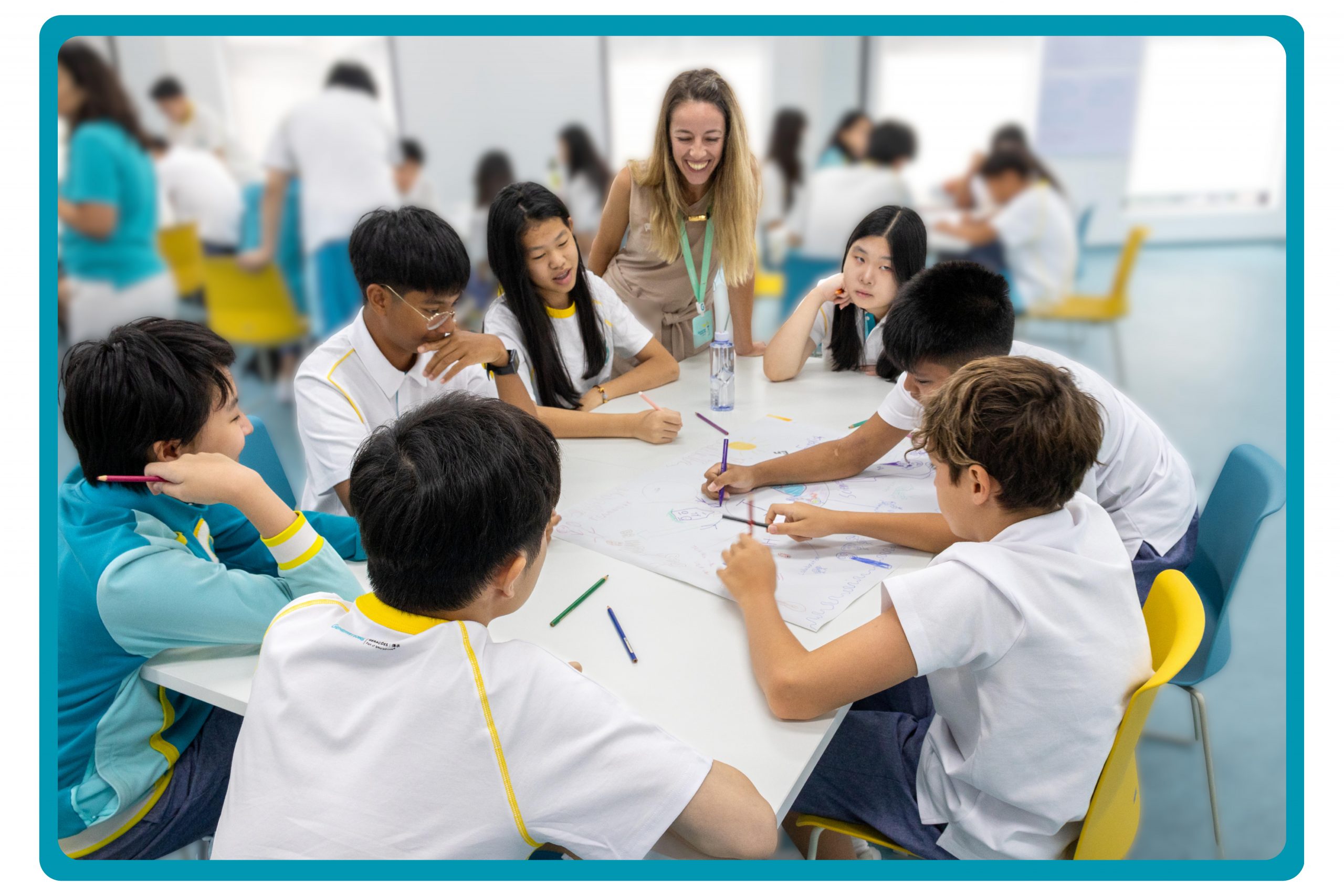

Middle Years Programme (Secondary 1 – 4)
The MYP emphasises inquiry-based learning, international-mindedness, and real-world connections. It spans eight subject groups: language and literature, language acquisition, individuals and societies, sciences, mathematics, arts, physical and health education, and design. It integrates global contexts, key concepts, and approaches to learning (ATL) skills, such as critical thinking and self-management, to foster interdisciplinary understanding. Teaching occurs through units of inquiry, promoting skills for lifelong learning and global engagement.
Personal Project
The personal project is a culminating MYP event completed in Secondary 4. It allows students to pursue a passion-driven goal, producing a tangible outcome, like a prototype invention, a sample product, or a piece of artwork, as well as a reflective report. Guided by a supervisor, it demonstrates ATL skills across four criteria: planning, application of skills, the recording process, and reflection. Assessed internally, then externally moderated, it emphasises self-management and global contexts and is often seen by students as one of the most fulfilling academic projects of their school life.
eAssessment (Beginning in Academic Year 2027-2028)
The MYP eAssessment offers external validation in Secondary 4, including on-screen exams, ePortfolios, and the personal project report. Exams in subjects such as language acquisition, science, and mathematics use criterion-related grading (1-7 scale) to assess conceptual understanding and skills through tasks such as data analysis or essays. ePortfolios showcase interdisciplinary learning and are externally moderated by the IB to ensure consistency.
Diploma Programme (Secondary 5 – 6)
Beginning in September 2027
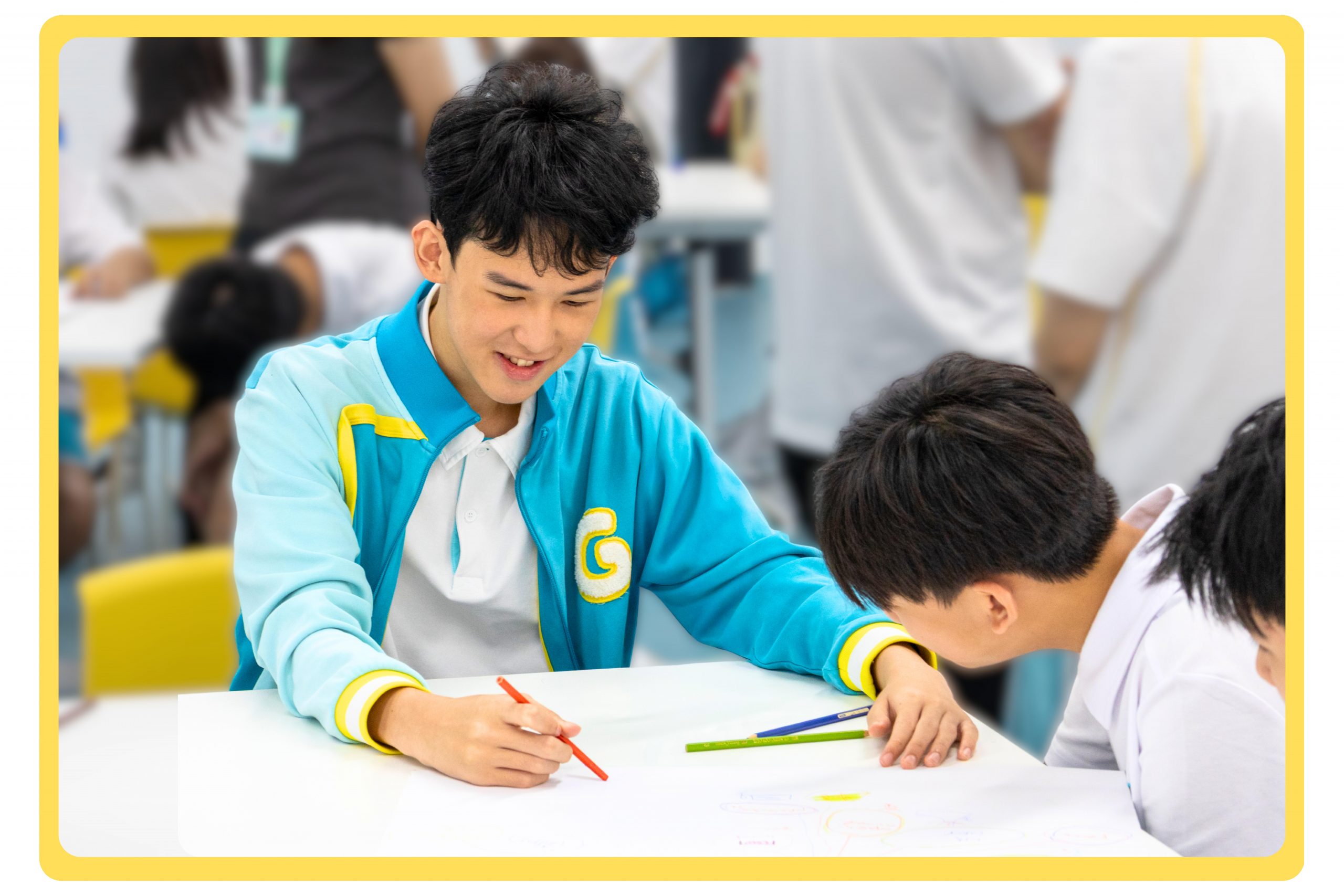
The IB Diploma Programme (DP) is widely regarded as the most rigorous programme for university matriculation in the world. It not only helps you get into better universities but also helps you succeed once you are there. The IB is not merely a curriculum; it supports the development of study skills through Approaches to Learning and the Extended Essay, presentation skills that build confidence, and character development through the Learner Profile. In its Creativity, Activity, and Service programme, students must demonstrate their artistic, sporting, and community service abilities. All these aspects make the IB Diploma the gold standard not only for gaining admission to top universities but also for success in life.
IB Diploma students are more likely to gain admission to top universities in the US than students following the US’s own domestic programmes. IB Diploma students are more likely to gain admission to top universities in the UK.
The IB Diploma is a challenging two-year curriculum comprising six subject groups and a core. Normally, three subjects are studied at Higher Level (HL, at least 240 hours of study) and three at Standard Level (SL, at least 150 hours of study).
Subjects Choices at GENERATIONS
Group 1: Studies in Language and Literature
- English SL/HL
- Chinese SL/HL
- Portuguese SL/HL
Group 2: Language Acquisition
- English SL/HL
- Chinese SL/HL
- Portuguese SL/HL
Group 3: Individuals & Societies
- Economics SL/HL
- Business Management SL/HL
- Geography SL/HL
- History SL/HL
- Environmental Systems and Societies SL/HL*
Group 4: Sciences
- Biology SL/HL
- Chemistry SL/HL
- Physics SL/HL
- Environmental Systems and Societies SL/HL*
- Design Technology SL/HL
Group 5: Mathematics
- Mathematics AI (Analysis and Approaches) SL/HL
- Mathematics AA (Applications and Interpretation) SL/HL
Group 6: The Arts
- Music SL/HL
- Visual Arts SL/HL
*Environmental Systems and Societies can be in either group 3 or 4
**Group 6 subjects can be replaced by another group subject, depending on a student’s university choices and availability.
The Core
The DP core includes three elements:
- Theory of Knowledge (TOK) – TOK challenges students to reflect on how they know what they know, think critically, and demonstrate their understanding through an exhibition and an essay.
- Extended Essay (EE) – The EE is a 4,000-word independent research paper on a chosen topic, designed to hone academic writing.
- Creativity, Activity, Service (CAS) – CAS requires 150+ hours across creativity (the arts), activity (physical pursuits), and service (community impact), promoting holistic growth.
Successful CAS outcomes are essential for the award of an IB Diploma but are not directly graded. TOK and EE contribute to the overall DP point score.
Testimonials Supporting the IB
“Success in an IB program correlates well with success at Harvard. We are always pleased to see the credentials of the IB Diploma Program on the transcript.” Marilyn McGrath, the former Dean of Admissions at Harvard University, US
“40.1% of IB students were accepted to a Top 20 Higher Education provider in the UK (based on an index created by looking at 3 major university ranking lists), while the same number only stands at 23.7% for A Level Students.” Laterna Education, The Netherlands
“One of the most striking findings from the research is that IB Diploma students have a significantly higher chance of securing places at top 20 UK universities. After controlling for academic ability, IB students were 57% more likely to enter a top-tier institution. In matched samples, 45.7% of IB students attended a top 20 university compared to 32.9% of A-level students.” ACS International School, UK